
New doesn’t equal perfect
In 2025 I purchased a brand new Specialized Status 2 170 for some enduro racing. and it came equipped with a Fox DHX rear coil shock and a Fox 38 Rhythm with a Grip damper. I used this bike exclusively for enduro racing for the month of August and It worked great! No issues seemed to be present, and even though it’s a low end bike with low level suspension components it was great at making up for my poor line choices! Then me and the bike took the month of September off until I went to Bryce Bike Park in Basye, VA to celebrate a friends big life change. As the day went on the fork started feeling harsher. I thought it might just be that we had been out there for 6 hours, until we got back to the parking lot and I went to do a bunny hop, this is when I realized it was way too hard to break into its travel. This was concerning but luckily we were done for the day and I had no plans to ride the bike over the winter, which gave me time to investigate this issue, so In mid November I was able to tear the fork down to see what might be going on, and I was very surprised with what I found.
Before we discuss what I found, knowing how many hours of riding this fork had on it. If I’m being liberal, I estimate 30 hours of ride time. This includes 3 enduro races, at each race I would do 2 days of riding averaging about 3.5 hours per day, for a total of 21 hours, and one 6 hour day at Bryce bike park.
When I pulled the lowers off of the fork I found almost very little oil in the damper side, and the little bit of oil that came air shaft side was black. Not dirty like from mud, but black as in metal wear, and this is where the title of this blog comes from.
Just because your fork is brand new, doesn’t mean that it is perfect. It is my opinion that today’s manufacturing process is rushed, and in the name of profits, manufacturers will under fill your lowers to save money. To that point, this makes doing routine maintenance on your suspension even more important!
The remedy was doing a thorough cleaning of the lower, inspecting the bushings and stanchions for any premature wear and luckily we found no such damage or wear of the stanchions or bushings. Then we checked the bushings for any binding or stickiness, and sure enough, we had very sticky bushings. The fix for this is our bushing burnishing tool from Relative Motion Suspension, this tool is a work of art! We performed the bushing burnishing(resizing) and filled the lowers with Fox’s recommend oil types and amounts and this fork felt amazing! The difference in small bump sensitivity was noticeable right away, it just felt so nice!
What is bushing burnishing? From RMS: The burnishing tool works by inserting a steel mandrel of an exact size through the bushing to deform the PTFE layer to be round because the burnishing head it self is round. This also leaves the optimal clearance for a perfect oil film. It fixes both out of round and tight bushes because once the bushing has conformed to the out of round seat, it can't deform anymore. The burnishing heads are designed so that they are larger than the final desired bushing size as the PTFE has a small amount of spring back and will shrink a bit after the tool has passed through. It is important to remember that bushings conform to out of round seats while riding. If sizing / burnishing a brand new fork that is unridden or has been ridden only a short amount of time, the fork will need to be revisited with the burnishing tool at a later time. The bushing sizing / burnishing process will not make a bushing conform to an out of round seat. The fork may initially feel incredible, and then might feel awful a short time later, the bushings have taken the shape of the seat and need a revisit from the sizing / burnishing tool.
If you are interested in us burnishing your forks bushings, call, text, email, or fill out our service request form!
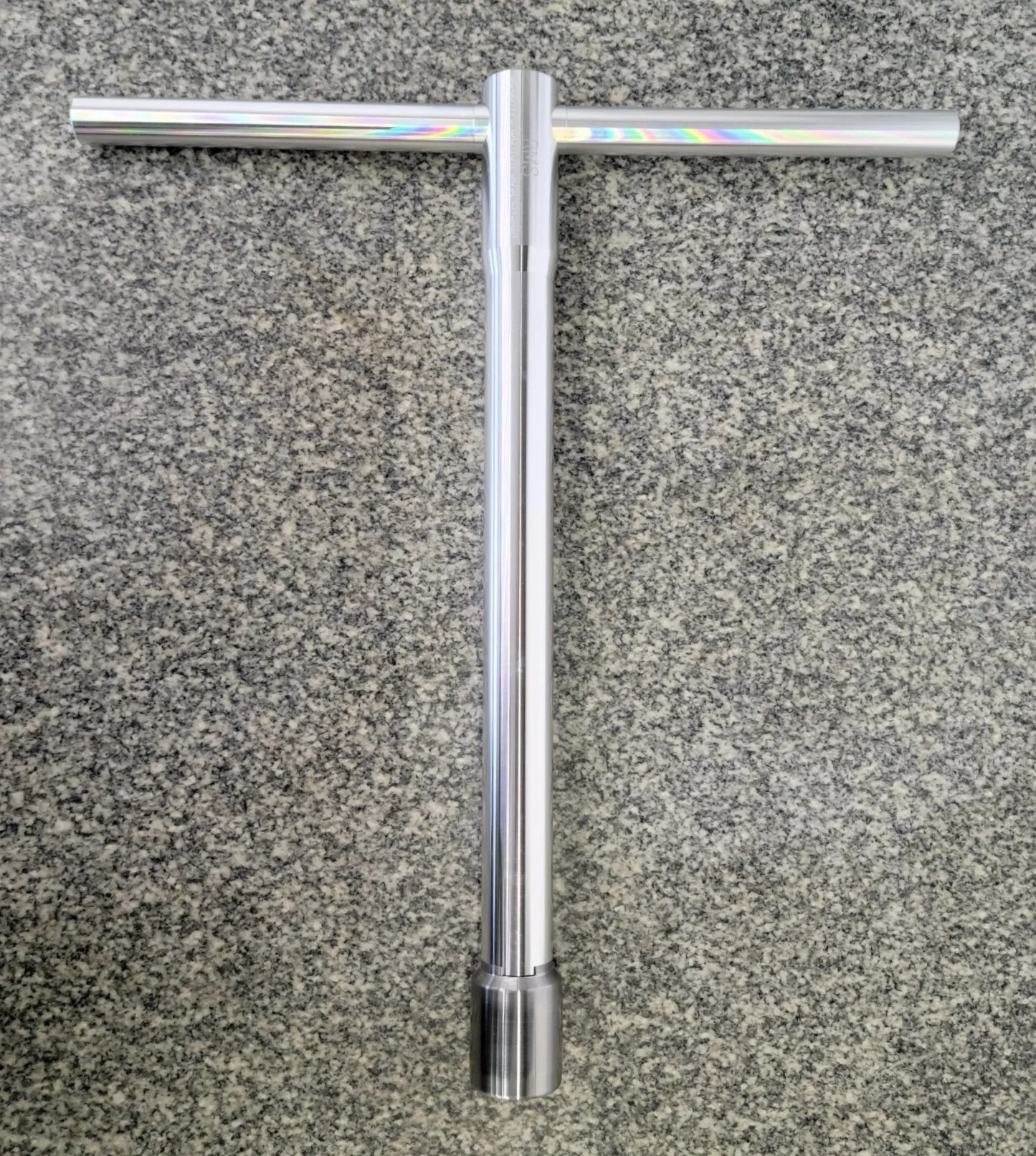
RMS Fork Bushing Burnishing/resizing tool
